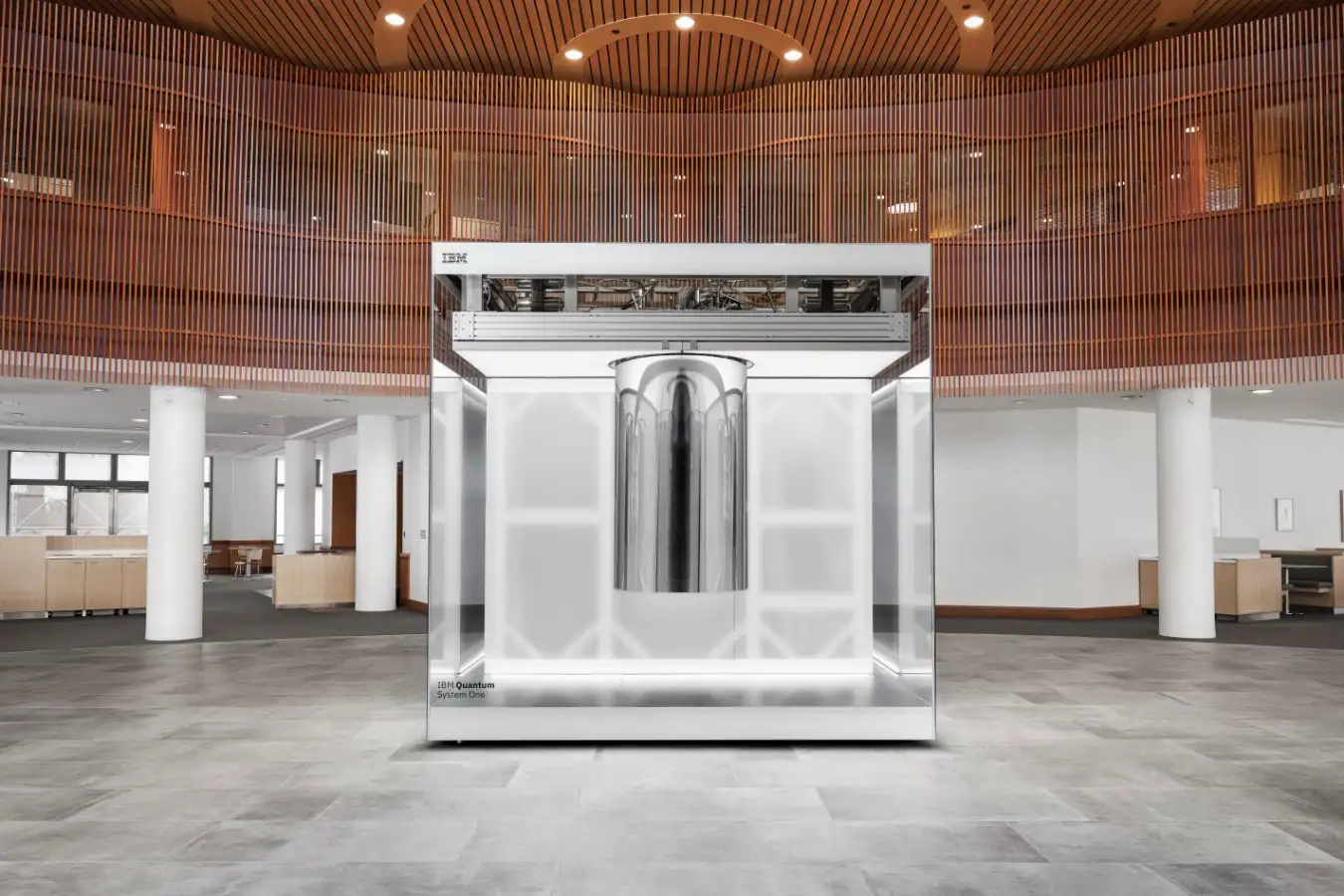
An IBM quantum computer at the Cleveland Clinic, one of the pair used to simulate a record-breaking large molecule
Kincaid/IBM
One of the most promising uses for quantum computers is to simulate proteins that could help us discover new drugs, but these devices are currently too error-prone for the task. However, two quantum computers have now broken a simulation record – determining the properties of a molecule with 12,635 atoms – with some help from supercomputers.
To understand the behaviour of drug molecules, we need to pin down the quantum states and energies of their electrons, a quantum problem that can often be solved only approximately on conventional computers.
A collaboration between researchers at the Cleveland Clinic in Ohio, the US tech firm IBM and the Japanese scientific institute RIKEN has instead turned to quantum computers, which “speak” quantum physics by default. They developed a hybrid approach that combines quantum computers and conventional supercomputers and used it to simulate two unprecedentedly large molecules, with one about 40 times bigger than the past largest molecule simulated using a quantum computer.
“This has been a dream of mine, and here we are,” says team member Kenneth Merz at the Cleveland Clinic.
The researchers used two IBM Heron quantum computers, one located at RIKEN and one at the Cleveland Clinic, and two supercomputers called Fugaku and Miyabi-G, which are among the most powerful in the world. For the molecules, the team chose two combinations of a protein and a small molecule, or “protein-ligand complexes”, that Merz says are well studied and popular as fundamental examples in biomedical sciences. The team also simulated them in a layer of water, bringing the results closer to mimicking how researchers work with the molecules in the lab.
Quantum computers alone currently have limited usefulness because of their relatively small size – which limits computing power – and their propensity to make errors. So, the team divided up the work of molecular simulations between the four machines, using the quantum computers only to calculate specific properties of some fragments of the molecules. The output was then handed to the supercomputers, and the whole calculation was a back-and-forth between the two types of computers over more than 100 hours. Even so, the team thinks the process was faster than it would have been without quantum hardware, says Jerry Chow at IBM. The simulations also estimated the lowest energies of the molecules with an accuracy competitive with some more standard methods, though not yet unequivocally superior.
Junyu Liu at the University of Pittsburgh in Pennsylvania says the team offers something that’s hard to come by: namely, practical steps towards useful quantum calculations using hardware that’s actually in use. He adds that “the scale of the experiment is genuinely impressive”.
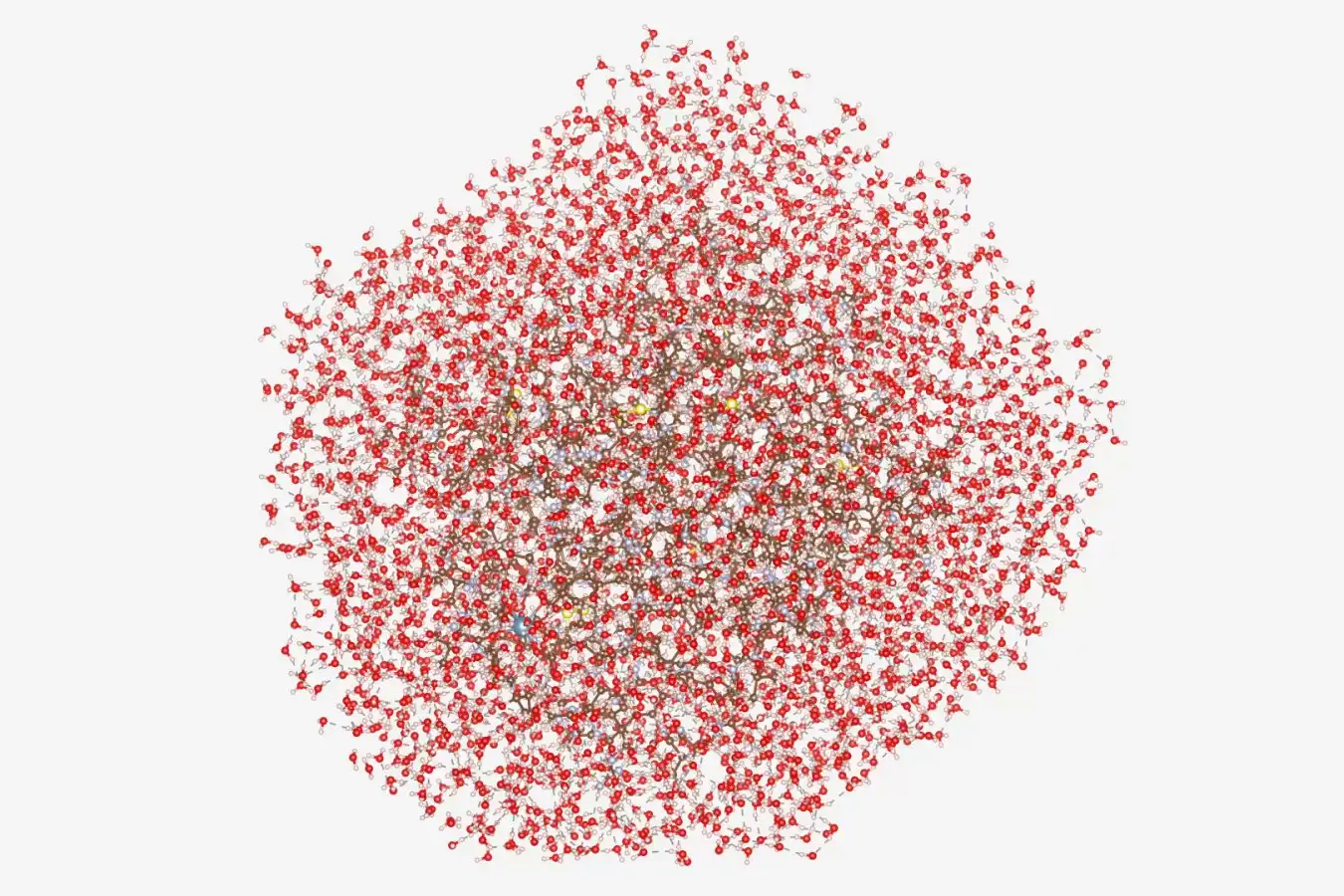
The simulated molecule had 12,635 atoms
IBM
Liu also says the new approach should be encouraged as a way to make quantum computers useful even before they are made error-proof. However, whether it can be rigorously mathematically proved that there are cases where the hybrid method will always guarantee superior performance – quantum advantage – is still an open question, he says.
Chow says while the current work indicates that quantum hardware might be superior for some parts of the calculation, the new simulation record is just a first step rather than definitive. “There’s this groundswell of just pushing the envelope of what can be done,” he says. “To me, the exciting piece is that it’s just getting started.”
Topics:
Source link : https://www.newscientist.com/article/2525277-quantum-computers-simulated-their-biggest-molecule-yet-with-help/?utm_campaign=RSS%7CNSNS&utm_source=NSNS&utm_medium=RSS&utm_content=home
Author :
Publish date : 2026-05-05 05:01:00
Copyright for syndicated content belongs to the linked Source.