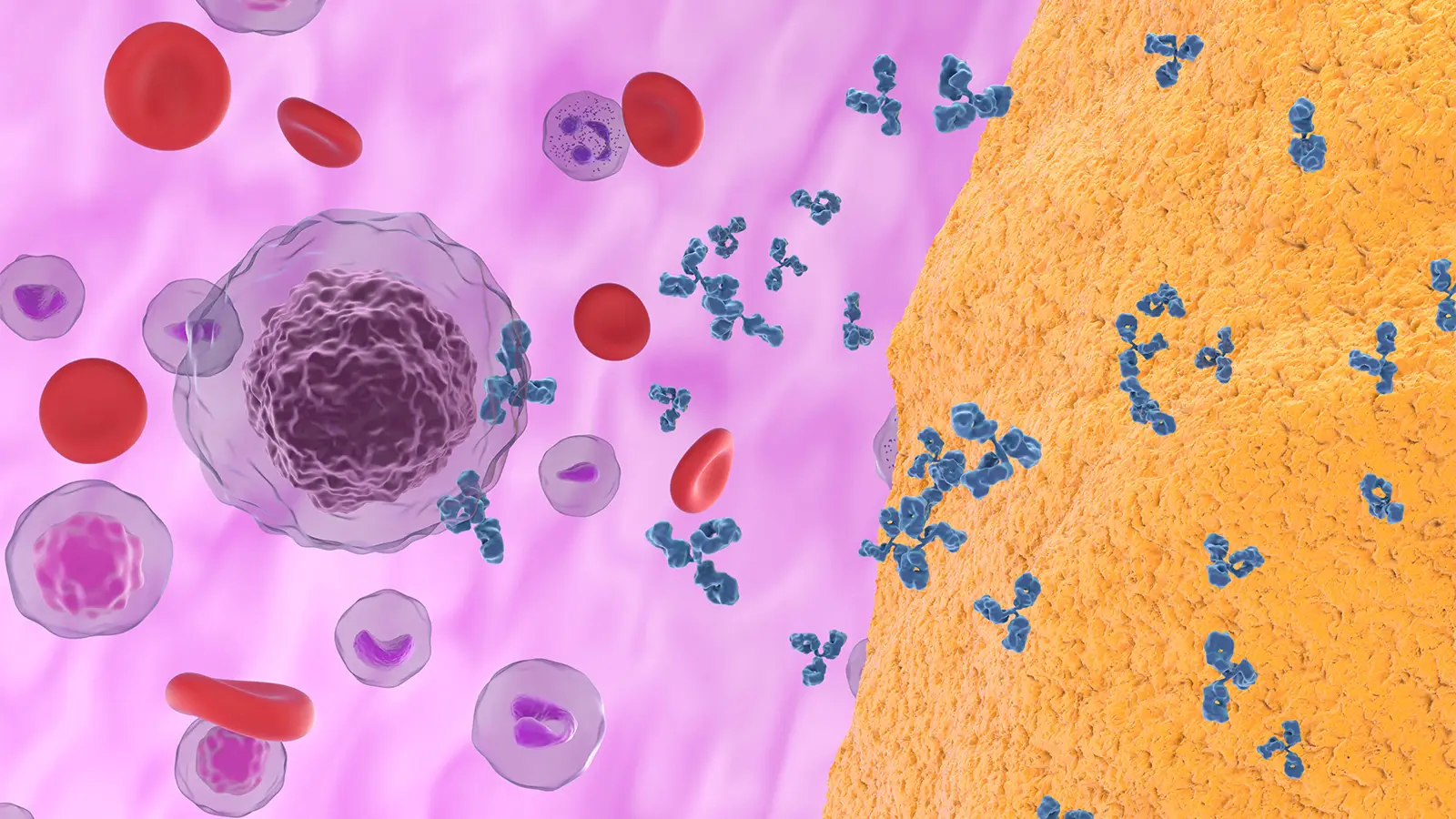
- Many patients who develop rheumatoid arthritis (RA) have anti-citrullinated protein antibodies (ACPA) while early symptoms are present but before full-blown RA can be diagnosed.
- ACPA-positive patients with full RA typically show a different pattern of symptoms and progression than ACPA-negative individuals, but whether this also applies in the pre-RA phase, called clinically suspect arthralgia (CSA), had not been investigated previously.
- This longitudinal study of 173 CSA patients documented different progression trajectories depending on ACPA status.
Patients with clinically suspect arthralgia (CSA), a common prequel to rheumatoid arthritis (RA), showed different patterns of symptoms and progression depending on whether they tested positive for anti-citrullinated protein antibodies (ACPA), researchers found.
Among 173 CSA patients followed for 2 years or more, those who were ACPA-positive developed full-blown inflammatory arthritis (IA, the broader family of joint disorders that includes RA) faster than those who were seronegative, but less morning stiffness and pain when their symptoms first came on, according to Annette van der Helm-van Mil, MD, PhD, from Leiden University in the Netherlands, and colleagues.
Locations of inflammation also differed according to ACPA status, the group reported in Annals of the Rheumatic Diseases. Positive serology was associated with more inflammation in the feet, whereas in ACPA-negative patients, the hands showed more involvement.
“These differences may reflect differences in underlying inflammatory mechanisms and suggest that different preventive strategies are needed to intervene in the development of ACPA-positive and ACPA-negative RA,” the researchers wrote.
ACPA can be detected long before symptoms develop, and the progression from CSA to full RA can take years more (and also may never become RA). Among patients with diagnosed RA, symptom patterns, responses to treatment, and rapidity of bone degradation also may differ with ACPA status. But whether serology matters during the early symptomatic period, before the condition meets criteria for RA, hasn’t been examined in detail.
For the current study, van der Helm-van Mil and colleagues drew on two sets of CSA patients: one enrolled at Leiden for a prospective observational cohort, and the placebo group in the landmark TREAT EARLIER trial, which sought to determine whether methotrexate could delay or even abrogate progression to full RA and was reported in 2022. Notably, in the latter study, ACPA-positive participants got more benefit from methotrexate compared with the ACPA-negative subgroup, suggesting that serology status might drive different trajectories in the absence of disease-targeted treatment.
Patients in both cohorts included in the new study were followed closely for 2 years and then at clinicians’ discretion (out to 5 years total in TREAT EARLIER; no defined end for the Leiden cohort). The overall sample was equally divided between ACPA-positive and ACPA-negative patients. Mean age was 49 for the ACPA-positive and 46 for the ACPA-negative, and 72% in both groups were women.
Symptom onset occurred prior to formal CSA diagnosis, and this also differed according to ACPA status, with patients carrying the antibodies having a longer period between onset and CSA (median 24 vs 16 weeks, P=0.006). But the pattern was reversed for the timeline between CSA and IA diagnosis: median 12 weeks for the ACPA-positive group, and 21 weeks for the ACPA-negative group (P=0.014).
At symptom onset, 79% of the ACPA-negative group indicated that pain and stiffness were mostly in the small joints, versus 62% among the ACPA-positive. Meanwhile, 69% of the ACPA-negative group said their hands were primarily involved, compared with 52% of the ACPA-positive group; ACPA-negative patients also were more likely to report morning stiffness (70% vs 54%, P=0.024) and they rated it as more severe, by 1 point on a standard 11-point scale. Negative status also was associated with more tender joints (median 5 vs 3 for the ACPA-positive group).
Lest one think that ACPA-positive patients generally had milder CSA disease, they showed a more rapid increase in C-reactive protein (CRP) levels, an important biomarker of systemic inflammation. Starting from a mean of about 2.5 mg/dL at 24 months prior to clinically apparent IA, it reached nearly 10 mg/dL by the time of IA development; in contrast, CRP levels in the ACPA-negative patients started at a higher point initially but then gained only about 1 mg/dL more, to just over 7 mg/dL. Inflammation as measured with MRI scans followed similar patterns in the two groups, with low initial scores in the ACPA-positive patients but showing more rapid gains as time progressed.
The researchers didn’t address clinical implications in detail, but they did observe that, given the TREAT EARLIER finding that methotrexate was more effective in delaying progression to RA in ACPA-positive participants, interventions for CSA patients may need to be tailored according to ACPA status.
Limitations to the study included that monitoring procedures, especially the timing of MRI scans, differed between the Leiden and TREAT EARLIER participants. Importantly, participants’ symptoms at initial onset were self-reported after the fact. No data on inflammation biomarkers other than CRP were collected, and it’s unknown whether they differed by ACPA status.
Source link : https://www.medpagetoday.com/rheumatology/arthritis/121489
Author :
Publish date : 2026-05-29 15:46:00
Copyright for syndicated content belongs to the linked Source.