[ad_1]
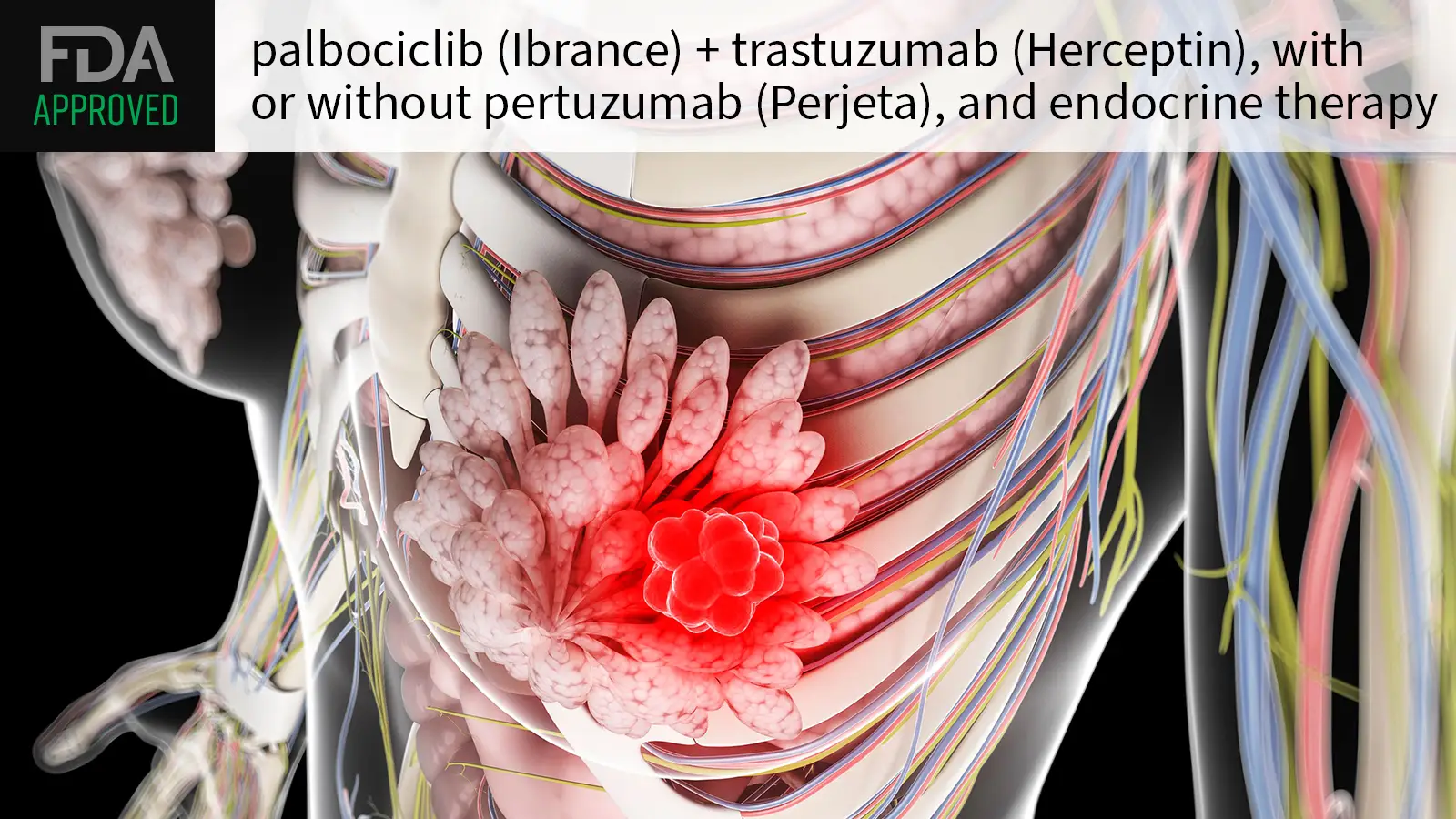
The FDA approved the CDK4/6 inhibitor palbociclib (Ibrance) as part of a first-line maintenance regimen for hormone receptor (HR)-positive/HER2-positive breast cancer.
Approval stipulates use of palbociclib plus trastuzumab — with or without pertuzumab (Perjeta) — and endocrine therapy following induction treatment for adults with locally advanced or metastatic disease.
In the open-label phase III PATINA trial, patients randomized to the palbociclib-based regimen had a 24% lower risk of disease progression or death compared with trastuzumab, with or without pertuzumab, and endocrine therapy alone (HR 0.76, 95% CI 0.59-0.97, P=0.0134). According to the FDA, median progression-free survival (PFS) could not be adequately described because of censoring.
When the study was presented at the 2024 San Antonio Breast Cancer Symposium, results showed a median PFS of 44.3 months with palbociclib versus 29.1 months without the CDK4/6 inhibitor.
At the time, the meeting’s invited discussant, Sara Hurvitz, MD, of the University of Washington and Fred Hutch Cancer Center in Seattle, called the PFS improvement with palbociclib “incredible … and really historic.”
Drugmaker Pfizer said the approval makes palbociclib the only CDK4/6 inhibitor with an indication in HR-positive metastatic breast cancer regardless of HER2 status.
“Resistance to dual anti-HER2 and endocrine therapy remains a central clinical challenge for patients with HR-positive, HER2-positive metastatic breast cancer — even after an excellent response to initial treatment,” said PATINA investigator Otto Metzger, MD, of the Dana-Farber Cancer Institute in Boston, in the company’s approval announcement.
“Based on the results from the PATINA study, the addition of Ibrance in the maintenance phase can meaningfully extend the time patients go without their disease progressing,” added Metzger. “This approval gives oncologists a new, evidence-based option to optimize maintenance therapy.”
The most commonly reported adverse events with palbociclib in PATINA were hematologic toxicities, while non-hematologic adverse events included diarrhea (70%), infections (64%), stomatitis (44%), and fatigue (32%).
Prescribing information for palbociclib includes warnings and precautions for neutropenia, interstitial lung disease/pneumonitis, and embryo-fetal toxicity.
[ad_2]
Source link : https://www.medpagetoday.com/hematologyoncology/breastcancer/121917
Author :
Publish date : 2026-06-24 20:58:00
Copyright for syndicated content belongs to the linked Source.