The patient was a 63-year-old man whose feelings of being unwell had been building for 4 days, and this was before anyone called 911.
By the time my emergency medical services (EMS) team arrived, his blood pressure was 198/110, and his oxygen saturation was 84% on room air. He was leaning forward in a recliner, working hard to breathe, and his wife, who had made the call, told the dispatcher he had a cold. She told the crew the same thing when they arrived, and while she was not lying, she wasn’t painting the full picture. She did not have a better explanation for what she had been watching for 4 days.
The medication list alone took 10 valuable minutes to reconstruct. There were supposed to be seven medications. She knew the colors of the bottles. She knew that one of them was for his heart and one was for the water his body likes to hold onto. She did not know the names, the dosages, or the prescribing conditions. The bottles were in a bag somewhere, and we only found three of them before transport.
The patient care report that arrived with him described a general illness call with a history of cardiac disease, hypertension, and an unknown medication regimen. It was accurate. It was also, as a clinical document, almost entirely the product of what his wife had been able to communicate in a language that she did not speak; a language of chief complaints and medication names and symptom timelines that nobody had ever taught her to speak.
You have likely seen this patient before, but you may not have been aware of the factors that shaped his arrival.
The Problem Has a Name
Approximately 36% of adult Americans have only basic or below basic health literacy — the capacity to find, understand, and use health information to make appropriate decisions. This population is well represented in emergency medicine research. They present later, with more advanced disease, with higher rates of medication non-adherence, and with more frequent emergency department (ED) visits for conditions that might have been managed earlier. The hospital-based health literacy literature is substantial and has driven meaningful reform in communication practices, discharge planning, and patient education.
The prehospital environment has not yet undergone comparable reform. EMS research has not systematically examined health literacy as a determinant of prehospital care quality. Dispatch protocols have not been designed to account for variable caller capability, and there are no validated tools for assessing health literacy in the field. The patient who arrives in your ED has already passed through a system that was not built around their capacity to navigate it, and the clinical picture you receive reflects that.
What Happened Before the Ambulance
The prehospital encounter begins not with the ambulance but with the decision to call it. For patients with low health literacy, that decision is shaped by factors that the ED never sees. They are less likely to recognize the clinical significance of their symptoms; less likely to know that jaw pain and left arm discomfort can represent acute myocardial infarction; and less likely to know that progressive dyspnea warrants urgent evaluation rather than watchful waiting; that the particular gray color of someone’s face at rest is not tiredness. They are more likely to delay, to attribute symptoms to non-medical causes, and to wait for something definitive that may not come until the window for intervention has narrowed or even closed.
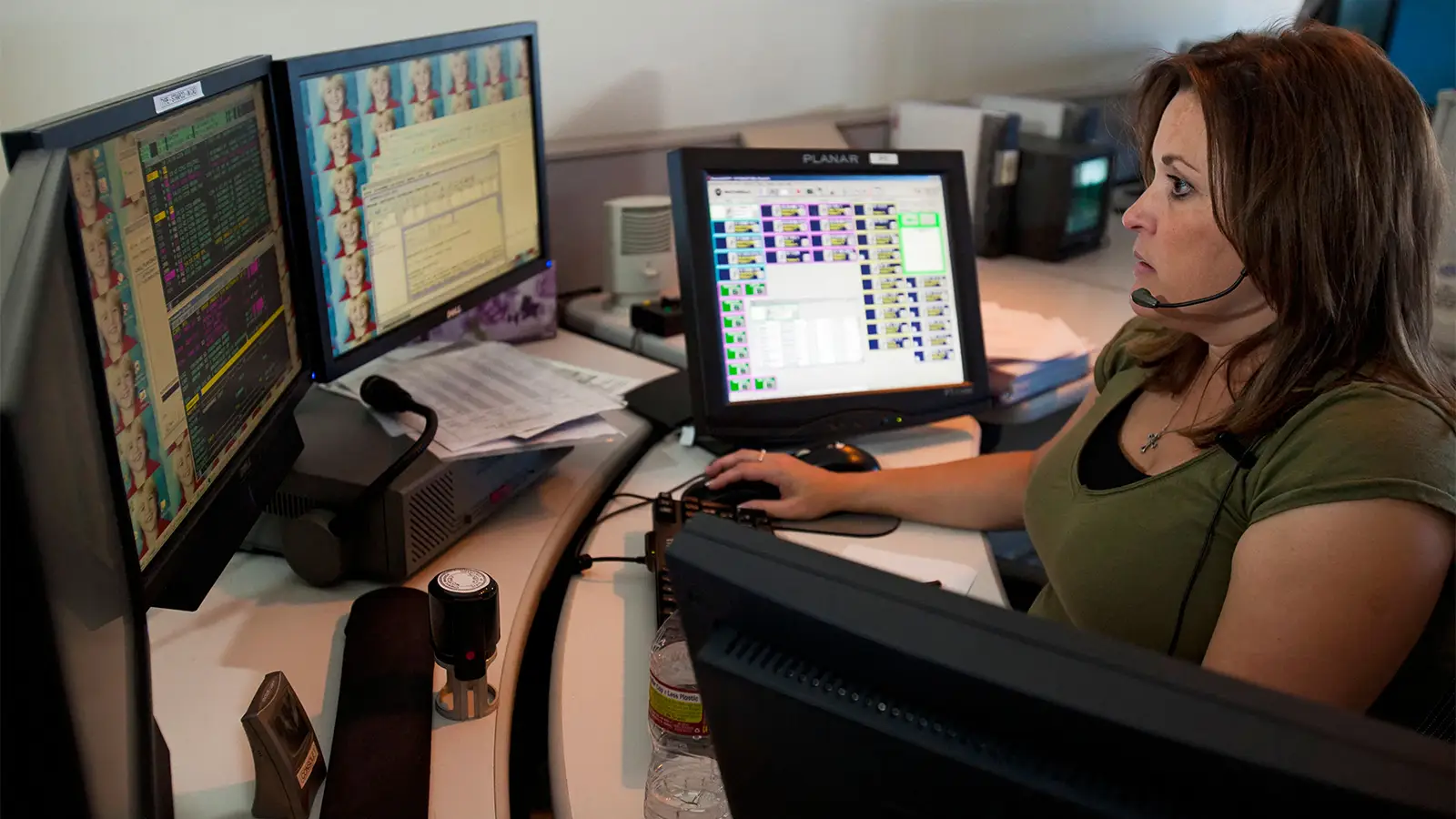
When they do call, the 911 interaction itself is a health literacy task of significant complexity. The Medical Priority Dispatch System, used widely across the country, requires callers to name symptoms in medically recognizable terms, report medications by name and dosage, and follow multi-step pre-arrival instructions under acute emotional stress. When callers cannot meet those demands, dispatch triage is made on incomplete information. The response priority, the crew configuration, and the pre-arrival interventions are all shaped by what could and couldn’t be communicated in the minutes before the ambulance left the station. A 2023 study in JAMA Network Open confirmed that EMS providers identify ineffective communication as a primary barrier to quality prehospital care, particularly for patients with limited English proficiency, and that the problem has not been systematically addressed at the protocol level.
On scene, the problem compounds. The patient history, including the onset, duration, severity, context, and medication regimen, is the foundation of prehospital clinical assessment. When that history is limited by health literacy, the assessment is built on an incomplete foundation. The crew does what it can with what it has. The patient care report reflects what was communicated, not necessarily what was true. And the physician who receives both the patient and the document inherits the gap between them, usually without knowing it exists.
After the Call
The health literacy burden does not end with discharge. Ground ambulance services remain explicitly excluded from the consumer protections of the No Surprises Act. Approximately 51% of emergency ground ambulance rides are provided by out-of-network services, leaving millions of patients at risk of surprise bills.
For patients with low health literacy, the billing document that arrives weeks after the encounter is itself an incomprehensible text written in the language of insurance rather than patients, challenging even health-literate recipients. Evidence suggests that patients who receive unexpected bills that they cannot manage are less likely to seek emergency care in the future. The health literacy failure that shaped the first call is now shaping the decision about the next one.
What This Means for Your Practice
The incomplete history, the delayed presentation, and the medication list reconstructed from bottle colors are not random failures of individual patients. They are the predictable output of a system that has not accounted for the health literacy of the population it serves, at the stage of care that precedes your involvement.
This is not exclusively an EMS problem. It is a continuum-of-care problem, and emergency physicians are positioned where its consequences become most visible. The patient who arrives late, with an incomplete record, after a dispatch interaction that could not fully capture the clinical picture, is a patient whose care has been shaped by health literacy at every stage of the encounter. Naming that is not an abstraction. It is the precondition for addressing it, of advocating for dispatch protocol reform, for supporting federal legislation that removes the billing deterrent to future emergency activation, and for reading the patient care report with an understanding of what it could and could not have captured.
The wife knew the colors of the bottles, and she did the best she could with what she had.
Source link : https://www.medpagetoday.com/opinion/second-opinions/121273
Author :
Publish date : 2026-05-14 20:47:00
Copyright for syndicated content belongs to the linked Source.