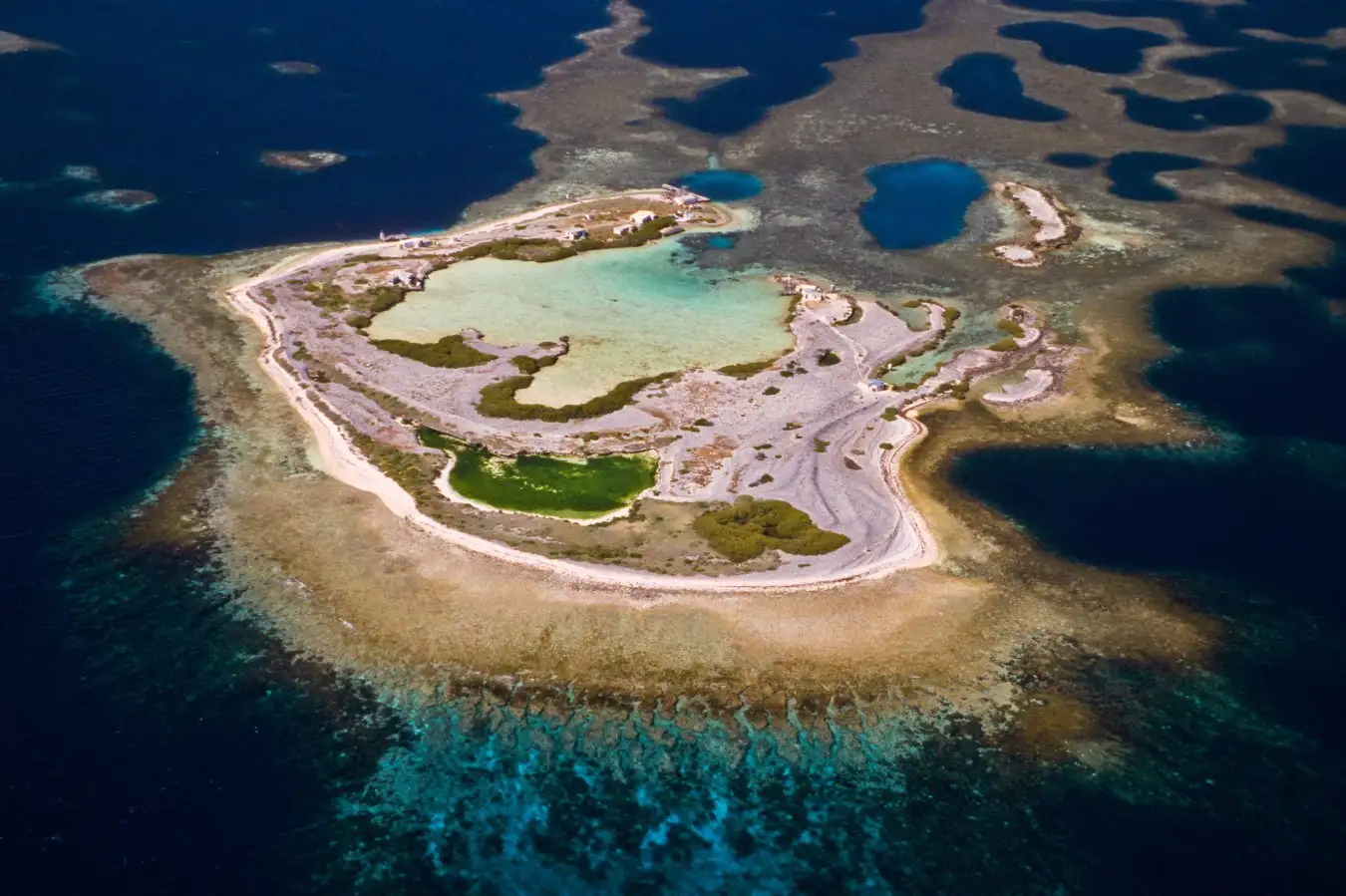
The Houtman Abrolhos Islands, off Western Australia, where corals appear to be exceptionally heat-tolerant
Bill Bachman/Alamy
Coral reefs on a chain of islands off Western Australia were almost untouched by a prolonged heatwave that devastated corals in other regions in early 2025. Researchers hope that learning the secret of extreme heat tolerance in these corals will help to protect reefs across the globe, which are in danger of being wiped out by global warming.
Kate Quigley at the University of Western Australia in Perth and her colleagues dived at 11 sites across the Houtman Abrolhos archipelago in July 2025.
Further north at the Ningaloo Reef, up to 60 per cent of corals died during the same heatwave. This was a story repeated at reefs around the world, with marine heatwaves in 2025 killing vast swathes of coral globally.
But at Houtman Abrolhos, apart from a few tiny patches, there weren’t even any signs of stress, such as fluorescing coral. “We expected to see mass bleaching with lots of white colonies, and likely mortality of reefs, given we did surveys after many months of marine heatwave. We did not see this,” says Quigley.
Prolonged heat stress generally leads to coral bleaching, when corals expel the symbiotic algae that live in their tissues, which provide most of their food.
Researchers measure the heat stress faced by corals in degree heating weeks (DHW), which accounts for how long a heatwave endures and how high temperatures reach.
Over 4 °C-weeks, scientists expect to see significant bleaching and above 8 °C-weeks, the situation becomes dire. “Values of around 8 °C-weeks are generally considered catastrophic and are often associated with widespread bleaching and mortality,” says Quigley.
The waters around the Houtman Abrolhos Islands hit 4 °C-weeks in early February 2025 and 8 °C-weeks by early March, but the temperatures kept rising and by mid-April the corals had experienced 22 °C-weeks of heat stress.
Quigley and her colleagues were most surprised to find that the full array of coral species at the reef all seemed immune to what had proved disastrous elsewhere.
To try to determine just how heat-tolerant the coral at the Houtman Abrolhos Islands actually are, the scientists brought colonies from several species back to the lab and subjected them to prolonged high temperatures.
At 8 °C-weeks, compared with currently accepted thresholds, survival rates at the Houtman Abrolhos islands were twice as high and bleaching resistance was nearly four times higher. There was still nearly 100 per cent survival at around 16 °C-weeks.
While the upper limit of the tolerance of corals there is still unclear, it is “clearly substantial and higher than what has been documented at other reef locations studied so far around the world”, says Quigley.
The next step for the researchers is to work out exactly how the corals are achieving this survival feat.
Because resistance was across many species, Quigley says it is possibly the algal symbionts that are giving the Houtman Abrolhos island corals their superpower.
“I think this location has a particular set of environmental factors that has driven the evolution of heat tolerance generally for the species that live there,” she says. Because of this, such reefs should be given the highest level of protection, and other similar high-tolerance sites should also be identified, she says.
Petra Lundgren at the Great Barrier Reef Foundation says such reefs serve as “natural laboratories for understanding heat tolerance”.
“They may also hold the key to advancing selective breeding and other interventions aimed at enhancing thermal resilience in conservation aquaculture and coral restoration,” says Lundgren.
While focusing on curbing global carbon emissions remains the most critical action to save these precious ecosystems, “providing adaptive assistance by, for example, seeding reefs with more heat-tolerant corals will give coral reefs their best chance at adapting to future heat stress events,” she says.
Topics:
Source link : https://www.newscientist.com/article/2524399-coral-reefs-on-a-remote-archipelago-shrugged-off-a-massive-heatwave/?utm_campaign=RSS%7CNSNS&utm_source=NSNS&utm_medium=RSS&utm_content=home
Author :
Publish date : 2026-04-27 16:00:00
Copyright for syndicated content belongs to the linked Source.